The Advanced OmniWing guide
Everything Mike taught beyond the basic wing, organized into one illustrated, printable PDF: how he builds structure out of paper, how he builds an airfoil, and how he builds the two-sheet Advanced OmniWing that flies fast, far and in wind.
Before you proceed: you should have experience building the Proto OmniWing, the OmniWing, as well as the OmniWing Modifications.Mike's title card, Advanced OmniWing Part 1
What's in the guide
- The four-fold rollThe paper spar behind every advanced wing: how to fold it, size it, cut it, and tape it so it adds stiffness without weight. Mike's "kiss fold" trick for taping without a third hand.
- Step 1 modifications: build up the leading edgeRolls on the front of the leading edge, a second roll behind, nose build-up. Thick in front, thin at the back, like a bird's wing. Taping while twisting so the structure holds the washout instead of flattening it.
- Step 2 modifications: double surfacesCutting tapered top-surface pairs, applying them flush at the nose, the one-third rule for the trailing edge, and where not to put weight. The result: more than twice the wing loading, aerobatics, outdoor flying.
- Advanced OmniWing, Part 1Two sheets, the corner cut that sets the roll angle, rolling the leading edge so it grows toward the root, trimming the tips, and joining the halves with overlap for sweep.
- Part 2: keel, twist, leading-edge rollsHeavier paper, ⅝-inch rolls, the keel almost nose to tail, establishing the twist, and the first test flight checkpoint.
- Part 3: cross sparsSeven rolls, the rear-most spar square to the keel, packing the nose, keeping the weight forward, second test flight.
- Part 4: top surfaces and finishTwo layers of double surface, sealing the overlap, toughening the nose, the finished airfoil in section.
- Variations and the 26-inch wingNose angles, the B-2 look, the roach cut, high aspect ratio, and the poster-paper wing with two sheets per side.
- Flying and tuning heavy wingsHill launches, wind, reflex, turn correction, and the test-fly-at-every-stage habit that saves wasted hours.
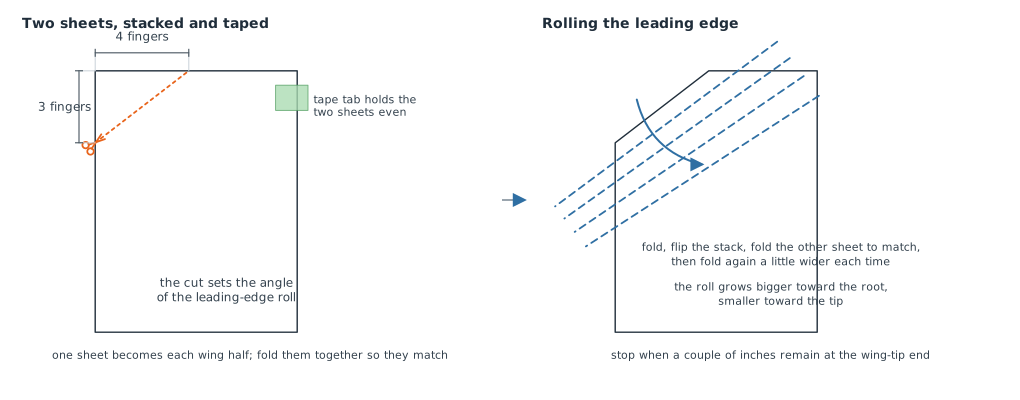
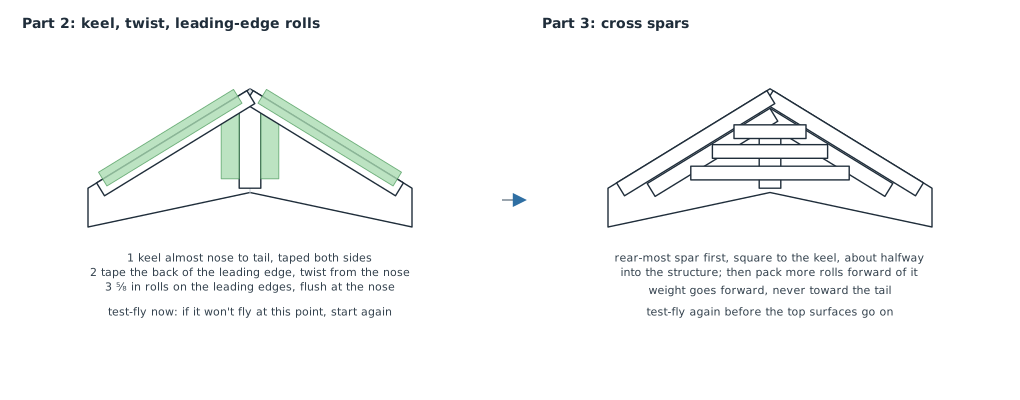
Two of the guide's diagrams. Same drawing style as the free guides, with stills from Mike's videos alongside.
Honest note
Mike's videos for all of this are free on YouTube and always will be; the guide links to each one. What you are buying is the work of turning seven videos from 2008 to 2014 into one clear, measured, illustrated document you can print and keep on the workbench, and a way to support keeping his designs online.
Questions
- What format is it?
- A PDF, US Letter, designed to print on a home printer in black and white or color. It also reads well on a tablet.
- How do I get it?
- Pay once, and the download link arrives by email within a minute. Keep it; it's yours. There is no account and nothing recurring.
- Do I need anything special to build the Advanced wing?
- Letter paper, some of it heavier (24 to 32 lb or light card helps), ¾-inch Scotch Magic tape, scissors, a pen. Poster paper for the 26-inch wing.
- Can I share it with my class?
- Teachers: yes, print copies for your students. Please don't post the file publicly.
- Is there something simpler for a classroom?
- Yes: the print-and-fold template is the basic OmniWing on one sheet, folds and instructions printed on the paper, $7.99 once, print as many as you like.